A Practical Guide to Safe Online Payments in Australia
Original Published Date: April 25, 2025 | Last Update: May 18, 2026
Disclaimer: The information in this article is general in nature and does not constitute personal financial advice. It has been prepared without considering your individual objectives, financial situation, or needs. Friendly Finance is not a financial adviser and does not hold an Australian Financial Services (AFS) licence. For free, independent guidance on protecting your money, visit ASIC's MoneySmart website at moneysmart.gov.au. If you believe you have been the victim of a scam or fraudulent payment, contact your bank immediately and report to Scamwatch.
Key Takeaways
Use a credit card for online purchases to benefit from Australia's ePayments Code, which protects you from unauthorised transactions — though note this protection applies to transactions made without your consent by a third party, not to payments you authorise yourself (even if you were tricked by a scam).
Always check for the padlock icon and "https://" in your browser's address bar to confirm the website connection is secure and encrypted.
Use digital wallets like Apple Pay or Google Pay, which use "tokenisation" to replace your real card number with a unique digital token — so the merchant never sees your actual card details.
Take advantage of Confirmation of Payee — a new name-matching service rolled out across Australian banks in 2025 that verifies the recipient's account name before you send a bank transfer.
Set up real-time transaction alerts through your banking app to spot and report fraudulent activity immediately.
In today's digital world, nearly every aspect of our financial lives happens online. From paying bills with BPAY to shopping on our favourite websites, convenience is at our fingertips. However, with this convenience comes the need for vigilance.
The scale of online financial crime in Australia is significant. According to the National Anti-Scam Centre's 2025 Targeting Scams Report, Australians reported $2.18 billion in scam losses in 2025 — a 7.8% increase on the previous year. Shopping scams were the most reported scam type involving financial loss, and online contact methods (websites and social media) were the primary channel scammers used to reach victims.
Understanding how to protect your financial information when paying online is no longer just a good idea — it is an essential skill for every Australian. This guide walks you through the most common online payment risks and provides simple, effective strategies to keep your money safe.
Common Online Payment Risks to Be Aware Of
Cybercriminals use increasingly sophisticated methods, but most online payment risks fall into a few common categories. Being able to spot them is your first line of defence.
Phishing Scams: These are fraudulent emails, text messages, or social media messages designed to look like they are from a legitimate company — such as your bank, Australia Post, the ATO, or a streaming service. They aim to trick you into clicking a malicious link and entering your password or payment details. Phishing remained the most commonly reported scam type in 2025, with over 65,000 reports submitted to Scamwatch.
Unsecured Websites: If a website's address does not start with "https://", any information you enter — including your credit card number — is not encrypted. This means it can potentially be intercepted by hackers. Always look for the padlock icon in your browser's address bar before entering any payment information.
Public Wi-Fi Dangers: Making payments or accessing your bank account while using public Wi-Fi (e.g., at a café, library, or airport) can be risky. These networks are often not secure, making it easier for criminals on the same network to intercept your data. If you need to make a payment on a public network, consider using a Virtual Private Network (VPN) to encrypt your connection, or wait until you are on a trusted private network.
Payment Redirection Scams: Criminals intercept legitimate invoices or payment requests — often through compromised email accounts — and substitute their own bank details. Payment redirection scams accounted for $166.8 million in losses in 2025, making them the second-highest loss category after investment scams.
Related Read: Cybercrimes: Identity Theft – What to look out for?
Your Toolkit: Best Practices for Safe Payments in Australia
You do not need to be a cybersecurity expert to protect yourself. Adopting these habits will significantly boost your payment security.
Use Credit Cards for Online Purchases
Credit cards offer one of the strongest layers of consumer protection available. Under Australia's ePayments Code, administered by ASIC, you are protected from unauthorised transactions. If your card details are stolen and used fraudulently by a third party, you can report it to your bank, and you will generally not be held liable for the loss. This provides a crucial safety net that you do not always get with other payment methods.
An important distinction to be aware of: The ePayments Code protects you from transactions made without your consent by a third party. However, if you are tricked by a scam into authorising a payment yourself — for example, transferring money to a fraudulent seller or responding to a payment redirection scam — the Code's unauthorised transaction protections may not apply. This is one of the reasons Australia's new Scams Prevention Framework (passed into law in February 2025) was introduced: to create broader obligations for banks, telcos, and digital platforms to prevent and disrupt scams, and to provide avenues for consumer compensation.
Use Confirmation of Payee for Bank Transfers
One of the most significant developments in Australian payment safety is the Confirmation of Payee (CoP) service, launched in July 2025 as part of the banking sector's Scam-Safe Accord. Australian banks invested $100 million to build this industry-wide name-matching system.
When you make a first-time payment using a BSB and account number, the Confirmation of Payee service checks whether the name you enter matches the account details held by the recipient's bank — before your payment is processed. You will see one of three results: a match, a close match (e.g., a minor spelling difference), or no match. If there is no match, you will receive a warning and can choose to cancel the payment.
As of March 2026, Confirmation of Payee is live across 83 financial institutions, covering over 143 million bank accounts, and has been used more than 100 million times. Early results show it is already making a difference — one major bank reported over 450,000 payments abandoned by customers after they received a "no match" result.
This is particularly important for protecting against payment redirection scams and business email compromise, where criminals substitute their own bank details for a legitimate payee's.
Transact with Secured Websites Only
Before entering any payment information, always check the website's address bar. The presence of a padlock icon and an address that begins with "https://" means the connection is secure and your data is encrypted. This is a non-negotiable first step for any online transaction.
Beyond the padlock, check whether the website displays a valid Australian Business Number (ABN) — you can verify this at abr.business.gov.au. Be wary of websites with no physical address, no phone number, and no clear returns or refund policy.
Set Up Real-Time Transaction Alerts
Most Australian banking apps allow you to set up instant push notifications for any transaction made on your account. This is one of the fastest ways to spot fraudulent activity, allowing you to contact your bank and lock your card immediately if you see something unexpected.
Many banks also now offer the ability to temporarily freeze your card, set daily spending limits, and block transactions from certain merchant categories — all directly from the app. These tools give you real-time control over your payment security.
Leverage Secure Payment Platforms
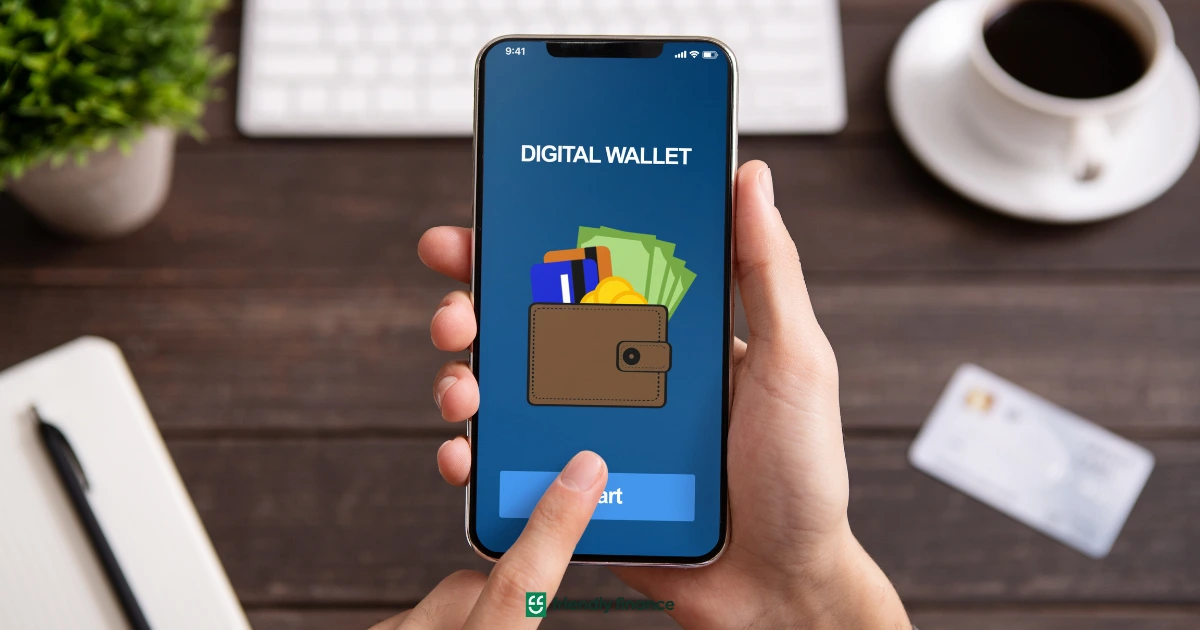
Digital Wallets (Apple Pay, Google Pay): These services use a security feature called tokenisation. This process substitutes your actual card details with a unique digital "token," meaning the merchant never sees or stores your real card number. This significantly reduces the risk of your details being stolen in a data breach.
PayID and BPAY: For direct bank transfers, using PayID (which links to your phone number or email) is often safer than entering BSB and account numbers, as it confirms the recipient's name before you approve the payment — helping to prevent payment redirection scams. BPAY is also a highly secure way to pay bills directly from your bank account. When used alongside the new Confirmation of Payee service, bank transfers now have multiple layers of verification protecting you.
Practice Strong Password Hygiene
Use a unique, complex password for every important account, especially for banking and payments. A password manager can help you generate and store strong passwords securely, so you do not have to remember them all. Never reuse your banking password for any other service.
Where available, always enable multi-factor authentication (MFA) — also known as two-factor authentication (2FA). This adds an additional verification step (such as a code sent to your phone or a biometric check) beyond your password, making it significantly harder for someone to access your accounts even if your password is compromised.
Setting Personal Spending Limits Online
One of the most effective ways to protect your finances is setting clear limits before spending occurs. Whether shopping, subscribing, or engaging with online services, defining what fits within your budget reduces the likelihood of overspending. This principle applies across all forms of discretionary spending. Some users, specifically slots fans, research international platforms such as the Iceland online casino poker website, out of curiosity or comparison. The activity itself is not the financial concern — what matters is recognising that any spending should remain discretionary, planned, and separate from essential expenses.
Evaluating Online Platforms Carefully
Not all online services operate under the same consumer protections. Understanding where a platform is based, how payments are processed, and what dispute options exist helps Australians make informed choices. Some blackjack enthusiasts refer to informational resources like the kaffiku guide for online casino when researching how different online casino platforms operate internationally. From a financial perspective, this type of research should be treated as general information rather than guidance for spending decisions. Applying the same scrutiny used for financial products — checking terms, understanding costs, and knowing exit options — helps reduce unnecessary risk.
Setting Clear Personal Spending Limits Online
One of the most effective ways to protect your finances is setting clear limits before spending occurs. Whether shopping, subscribing, or engaging with online services, defining what fits within your budget reduces the likelihood of overspending.
This principle applies across all forms of discretionary spending. Set a weekly or fortnightly cap on non-essential online purchases. Review your subscriptions at least quarterly — streaming services, apps, software tools, and meal kits can accumulate without you realising. If you are not actively using a subscription, cancel it. Every dollar saved on an unused service is a dollar you can redirect toward your savings goals.
Your bank's app may also allow you to set daily transaction limits or temporarily lock your card before browsing online, removing the temptation of impulse purchases.
Evaluating Online Platforms Carefully
Not all online services operate under the same consumer protections. Before spending money on any platform, take a moment to evaluate where it is based, how payments are processed, and what dispute options exist.
Australian Consumer Law provides protections for purchases made from Australian businesses, including rights to refunds and replacements for faulty goods. If a platform is based overseas, your options for dispute resolution may be more limited. Be cautious about platforms that only accept bank transfers, cryptocurrency, or gift cards — these payment methods are much harder to recover if something goes wrong. Credit cards and PayPal offer chargeback mechanisms that provide an additional safety net.
Applying the same scrutiny you would use for financial products — checking terms, understanding costs, and knowing exit options — helps reduce unnecessary risk.
What to Do If Something Goes Wrong
Even with strong precautions, fraud can still occur. If you suspect a fraudulent payment or believe your payment information has been compromised, acting quickly can limit the damage:
Contact your bank or financial institution immediately. They can freeze your account, block your card, and in some cases reverse the transaction. Most banks have 24/7 fraud hotlines.
Report to Scamwatch at scamwatch.gov.au. Even if you have not lost money, reporting helps the National Anti-Scam Centre identify and disrupt scam networks. Remember Scamwatch's framework: Stop. Check. Protect.
Contact IDCARE on 1800 595 160 if your personal identity information (such as your driver's licence, passport, or Medicare number) may have been compromised. IDCARE is Australia's national identity and cyber support service and provides free, tailored case management.
Lodge a complaint with the Australian Financial Complaints Authority (AFCA) if your bank does not resolve an unauthorised transaction dispute to your satisfaction. Under the ePayments Code, AFCA can review complaints about electronic payment issues. Visit afca.org.au for more information.
Report to ASIC if the fraud involved a financial product or investment. Check ASIC's investor alert list for companies and websites that are not to be trusted.
Conclusion: Making Security a Habit
In Australia, we are fortunate to have an increasingly secure digital payment ecosystem — from the ePayments Code and Confirmation of Payee to digital wallets and real-time banking controls. The Scams Prevention Framework, passed into law in early 2025, adds further obligations on banks, telcos, and platforms to protect consumers.
But technology alone is not enough. By combining the safeguards available to you with smart, consistent security habits — checking URLs, using credit cards, enabling MFA, setting spending limits, and knowing what to do if something goes wrong — you can use online payments with confidence.
For free, independent guidance on protecting your money online, visit ASIC's MoneySmart at moneysmart.gov.au/online-safety.