
Understanding kWh: How Heat Pumps Change the Way Your Household Uses Electricity
General Advice Warning: The information provided in this article is for educational and general cybersecurity literacy purposes only and does not constitute formal financial, IT security, or legal advice. Friendly Finance operates strictly as an independent comparison and loan-matching platform, not a direct credit provider or cybersecurity firm. If you believe your personal or financial accounts have been compromised on a public network, contact your banking institution and report the incident to IDCARE immediately.
“Will a heat pump make my power bill go up or down?”
It sounds like a simple question. The honest answer is that it depends on what you’re replacing, and that your kWh figure and your bill don’t always move the same way.
Take a family that switches off the gas heater for good. Their electricity use climbs, because the heating now runs on power, which isn’t a mistake. It’s happening across the country. Australian residential electricity use rose 6.2 per cent in 2024–25 while residential gas use fell 2.3 per cent, according to the federal Australian Energy Statistics update, which adds that the Australian Energy Market Operator puts the gas decline down to cost pressures, electrification and policy incentives.
So the kWh line matters more than it used to. Here’s how to read it, and where heat pumps change it.
What the kWh line on your power bill actually measures
One kilowatt hour is a kilowatt of power used for an hour. A 2 kW heater running for three hours uses 6 kWh. Simple. And it’s the reason a few cold evenings can quietly dent a bill.
How much does a typical home use? The Department of Climate Change, Energy, the Environment and Water’s household comparison assumes 25.2 gigajoules a year, which works out to about 7,000 kWh. Yours will shift with the size of the house, who lives in it and how hard you run the heating and cooling.
New Zealand shows a similar trend, if a gentler one. The Ministry of Business, Innovation and Employment says households use about a third of that country’s electricity, and residential demand rose 1.9 per cent in 2024.
Why heat pumps generally use less electricity for the same warmth
A plug-in heater turns one unit of electricity into one unit of heat. That’s its ceiling. A heat pump doesn’t make heat, it moves it, pulling warmth out of the outside air (even cold air holds some) and pushing it indoors with a compressor. Your fridge works on the same principle.
An analysis in The Conversation puts modern units at three to six units of heat for every unit of electricity. Run that against the 6 kWh from earlier. At a ratio of three, a heat pump needs about 2 kWh for the same warmth, and at six, about 1 kWh. Treat that as a best case, though, because the ratio slips as the weather gets colder.
And if you’ve got a reverse cycle air conditioner, you already own a heat pump.
How far that shows up in dollars depends on the comparison. The same analysis estimates running costs 60 to 85 per cent lower than an electric fan heater, and roughly half the cost of heating with gas. The US Department of Energy talks about cutting electricity use by about 50 per cent against furnaces and baseboard heaters. Different countries, different methods. Read them as a range, not a promise.
What decides whether your kWh use actually drops
Start with what you’re replacing. Plug-in heaters leave the most room for improvement. Gas is trickier. Your kWh will rise, as above, even though the gas charge shrinks or disappears, so the price gap between the two fuels does a lot of the work.
The European Commission reckons switching from a gas boiler cuts heating bills by 20 per cent to more than 60 per cent across the EU, depending on local prices and the home, and that gas can still win where electricity costs over three times as much. European prices aren’t ours, but the logic travels.
Then there’s the house. If warmth is leaking out through gaps and bare ceilings, a heat pump spends its time chasing it. Sealing draughts and adding insulation can let you buy a smaller, cheaper unit, as The Conversation notes, and the European Commission agrees that a smaller heat pump with some efficiency upgrades can beat a bigger one on its own. The US Department of Energy suggests a home energy audit before you upgrade.
And then sizing. Too big costs more upfront, and efficiency drops as the gap between outdoor and indoor temperature widens. Floor area alone doesn’t settle it, so ask a licensed installer to work it out for your place.
Whole-home or single-room: how system type affects usage
Wall units are the easy option. One in the living room, one in the main bedroom, job done. The catch comes when every room gets its own: more outdoor units, more remotes, and a bill that relies on everyone remembering to switch things off.
A whole-home system takes a different route. One outdoor unit, ducts through the house, and zones so you can close off rooms nobody’s using. A ducted heat pump suits some homes better than others. It needs somewhere to run the ducting, such as the roof space or under the floor, and the zones only save electricity if you actually use them.
Which one wins? It depends on the layout. If you live in two rooms and the rest of the house sits empty, a couple of small units may be cheaper to run than conditioning a whole floor plan. If everyone’s spread out, one zoned system is usually easier to manage.
Habits that keep your kWh down after the switch
A few small ones. Clean the filter every few months, since a blocked one cuts both efficiency and output. When you buy, check the energy rating label. More stars is better. Use zoning or the timer so you only heat the rooms you’re in.
If an older unit has stopped delivering the heat it used to, it may have lost some refrigerant and need a top-up from a licensed technician.
Start with the bill you already have
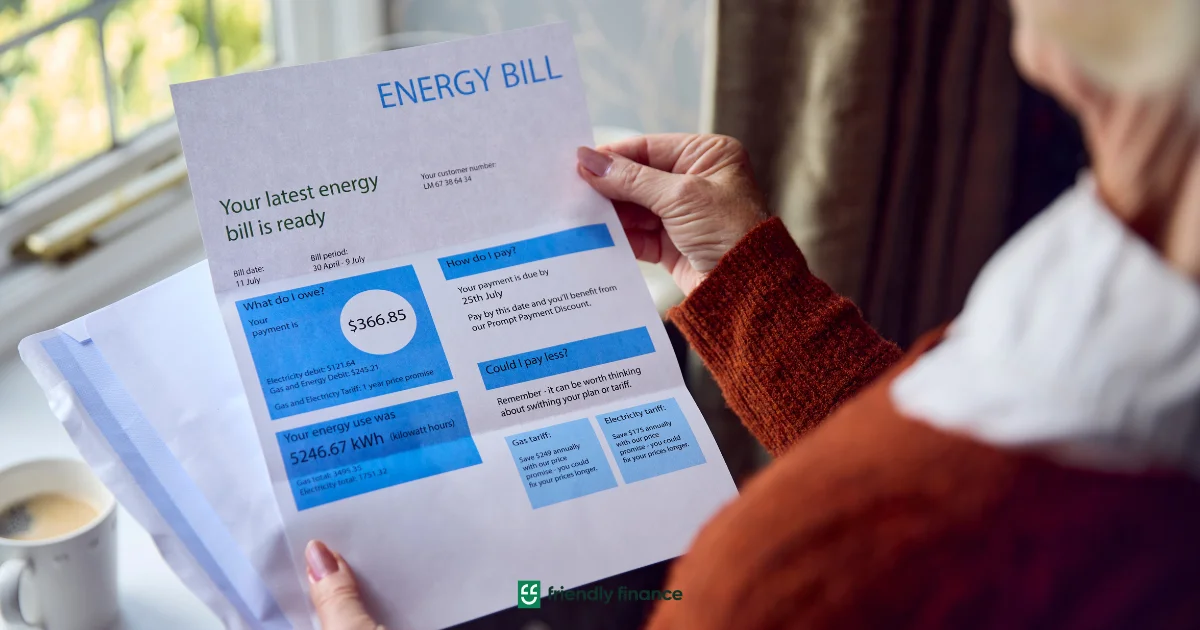
Dig out last winter’s bill and find the usage line. Note the kWh. That’s your baseline, and it makes any quote easier to judge because you’ll know what you’re trying to move.
Then get more than one opinion. A licensed technician or accredited installer can size a system for your home, and the government’s energy rating site, energyrating.gov.au, lets you compare units by star rating before you talk to anyone.
